
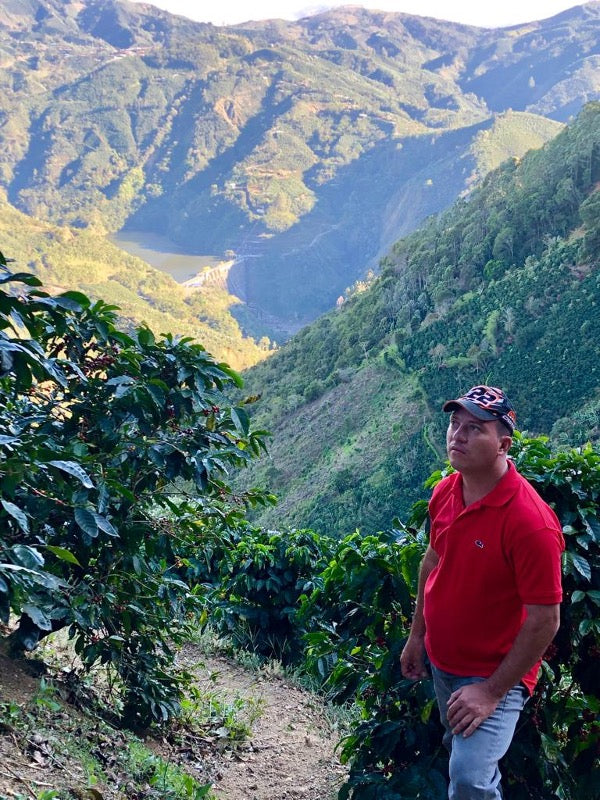
This microlot comes from Finca La Ladera in the Tarrazú region of Costa Rica, a farm owned and operated by the Bonilla family for more than a century. La Ladera sits on steep hillsides at high elevation, receiving the first rays of sun each morning — a setting that reflects both the beauty and the agricultural richness of Tarrazú. The farm is supported by the Don Mayo processing plant, named after the father of Don Franco Bonilla, further tying the family’s work to its long history.
The Yellow Honey process sets this lot apart from the clean, citric profiles often associated with Costa Rican coffees. In this method, the coffee cherries are pulped but a portion of the sticky mucilage is left intact on the seed. The beans are then dried for about six days on patios, followed by mechanical drying. This hybrid approach produces a coffee that is syrupy and full-bodied, with balanced acidity and enhanced sweetness, contrasting with the sharper citrus and tea-like qualities found in many washed Costa Ricans.
Coffee Processing Spotlight — Honey Process
Honey-processed coffees require constant attention during drying to avoid over-fermentation or defects, but when executed well, they can deliver some of the most exciting and complex flavor profiles in specialty coffee.
The honey process is a method of coffee production that originated in Costa Rica, bridging the clarity of washed coffees and the fruit-driven intensity of naturals. After the coffee cherry is pulped, some of the sticky fruit mucilage is intentionally left on the seed during drying. The amount of mucilage left determines whether a coffee is yellow, red, or black honey.
-
Yellow Honey → The least amount of mucilage remains. Drying is quicker (often 6–8 days), producing a cup that is clean, bright, and gently sweet.
-
Red Honey → A moderate amount of mucilage is left. Drying takes longer (10–14 days), resulting in deeper sweetness, more body, and fruitier notes.
-
Black Honey → The most mucilage is preserved. Drying can take 15+ days, requiring careful monitoring. The cup is syrupy, heavy-bodied, and intensely sweet.
The work of the Bonilla family at La Ladera demonstrates both innovation and care for the land. Each harvest reflects their commitment to quality, while the farm itself remains a testament to generational stewardship. This lot was sourced through Red Fox Coffee Merchants, with special thanks to their on-the-ground relationships that make offerings like this possible.
Like many honey-processed coffees from Central America, this Yellow Honey bridges the clarity of washed coffees and the fruit-driven intensity of naturals. Compared with red or black honey methods, yellow honey involves less mucilage during drying, typically resulting in a cleaner, brighter cup while still adding body and sweetness.
Profile
-
Roast: Light-Medium
-
Region: Tarrazú, Costa Rica (pronounced “TAR-ah-zoo”)
-
Farm: La Ladera
-
Producer: The Bonilla Family
-
Process: Yellow Honey
-
Elevation: 1,700m
-
Variety: Catuai
-
Cup: Rainier Cherry, Chocolate Banana, Toffee
Share:
Burundi — Umuco Natural
Burundi — Nyankurazo