
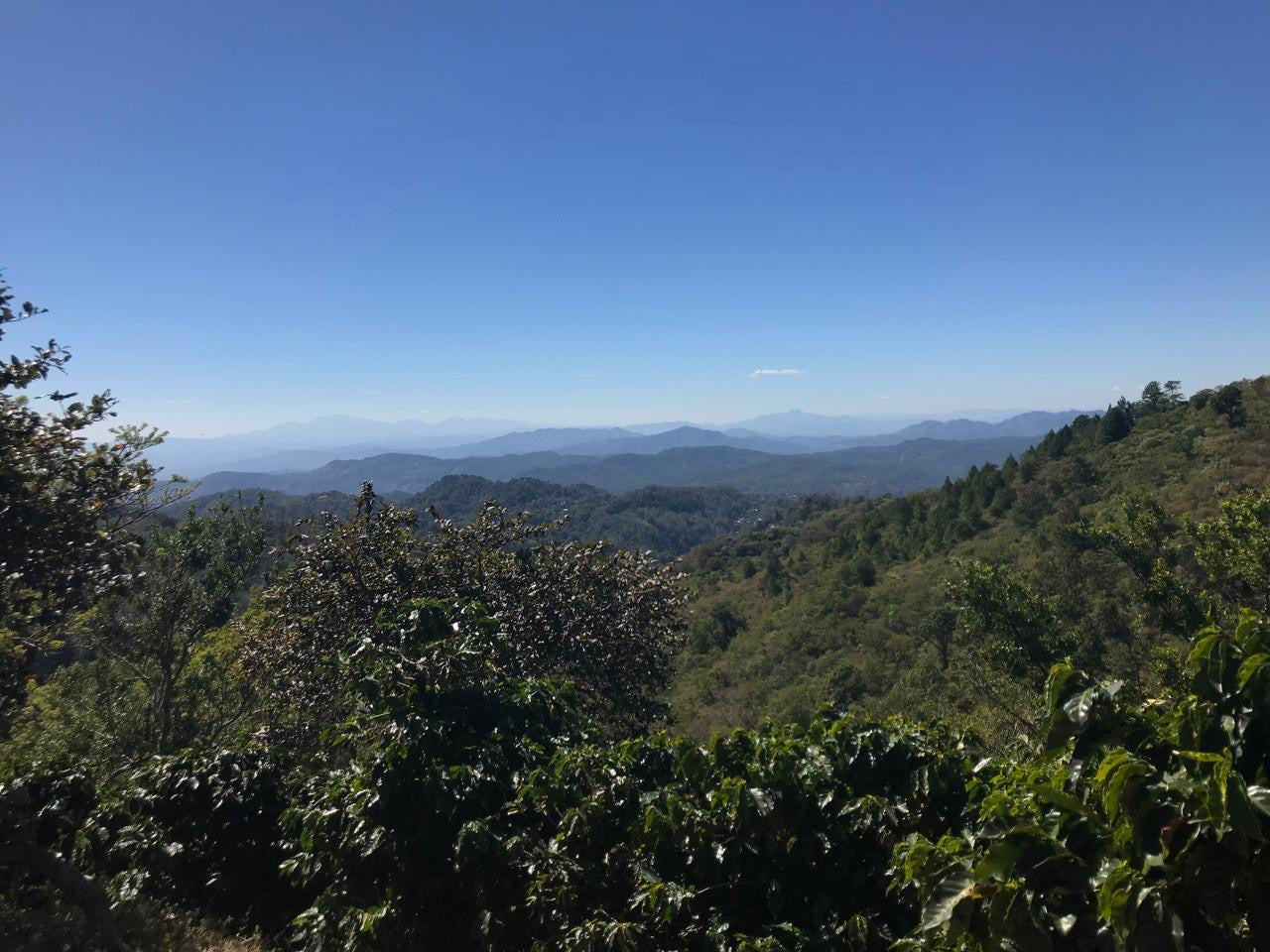
There are coffees that are easy to source, and then there are coffees like this one.
Jose Noe Ochoa, known as Don Noe, is a small-scale farmer living and working in La Palma, a remote, mountainous region of El Salvador. Don Noe farms 3 hectares of land with his wife, growing Pacamara, Pacas, and Gesha at around 1,800 meters above sea level. Together, they produce somewhere between 600 and 800 pounds of Gesha per harvest. It is a modest output by any industry standard, and every pound of it reflects the kind of quiet, dedicated labor that rarely gets the spotlight it deserves.
Don Noe does not have a phone. He does not have reliable internet access or easy transportation off the mountain. His farm sits in an area so rural and isolated that even getting photos for something like this blog requires the help of a trusted middleman. Because of the long travel distance from the farm, Don Noe dries his coffee on-site before it is sent down to a dry mill in Metapan, Santa Ana, for final processing. The honey process you taste in this cup was not achieved in a state-of-the-art facility. It came from careful attention in difficult conditions.
This coffee reached us the way all Forest Flame coffees do: through relationship. Our friend Britt McCoy, based in Dallas and someone we have been lucky to connect with at SCA Expo in Houston, helped us navigate the language barrier and the logistics to secure this lot directly. Without her, a coffee this remote and this remarkable would never have made it to your cup.
When you taste Don Noe's Honey Gesha, you are tasting something that took real effort to bring to you. Not a commodity. Not a catalog offering. A coffee grown by a man and his wife on a hillside in La Palma, with no fanfare and no following, just exceptional fruit and the kind of care that shows up in every sip.
Share:
Costa Rica –– Finca Corralar
Peru –– La Vicuña