
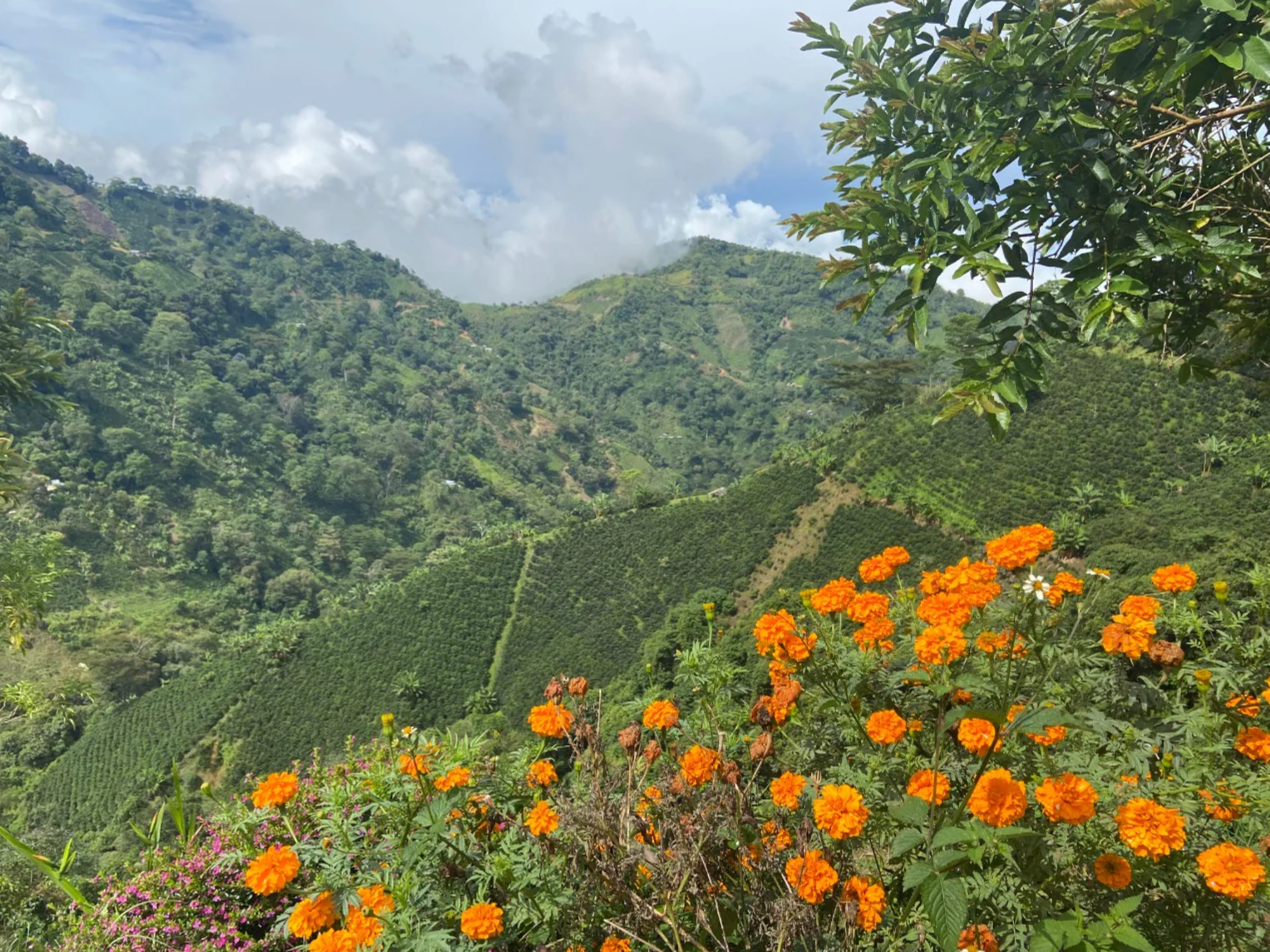
This decaffeinated lot comes from SIRUMA Farms in Colombia, sourced through our partners at Falcon Coffee. The coffee represents a blend of high-elevation lots (1,600–2,000 meters) from the regions of Cauca, Caldas, and Tolima. These areas have become consistent sources of quality in Colombian specialty coffee, producing clean, vibrant cups even when decaffeinated.
The coffee is decaffeinated using the sugar cane process, also known as ethyl acetate (EA) decaffeination. This method has become one of the leading approaches in Colombia, particularly because it can be done at origin and helps preserve the original character of the coffee.
Coffee Processing Spotlight — Sugar Cane Decaf
The sugar cane decaffeination process uses ethyl acetate (EA), a compound derived naturally from the fermentation of sugar cane. It is sometimes referred to as “natural decaf” because the solvent is plant-based and the process is carried out without the addition of synthetic chemicals.
How It Works
-
Coffee beans are steamed to open their pores.
-
The beans are rinsed repeatedly with ethyl acetate, which bonds with the caffeine molecules and removes them.
-
The beans are then steamed again to remove any residual EA, leaving the coffee virtually caffeine-free (97–99% caffeine removed).
Why It’s Different
-
EA is naturally occurring, making this process appealing as a “clean” alternative to harsher methods.
-
Because the process can be performed in-country, it reduces transport and cost for producers.
-
Many consider it more flavor-preserving than Swiss Water or CO₂ processes, maintaining more of the coffee’s original sweetness and character.
What to Expect in the Cup
-
Cleaner and less “muted” flavors compared with older decaf methods.
-
Retention of aroma, mouthfeel, and vibrancy, closer to the original coffee.
-
Smooth, sweet cups without the “flat” or “papery” notes often associated with decaf.
Sugar Cane vs. Swiss Water
The Swiss Water® Process is perhaps the most recognized decaf method worldwide, developed in Switzerland and refined in Canada. It is completely chemical-free, using only water and carbon filtration to remove caffeine. While it produces a clean, reliable cup, it often requires sending coffee abroad for processing and can sometimes mute sweetness or vibrancy.
By contrast, the Sugar Cane EA Process is performed at origin in Colombia, supporting local infrastructure while maintaining more of the coffee’s original character. Where Swiss Water prioritizes neutrality and consistency, sugar cane decaf often results in cups that are truer to the original flavor, with greater sweetness and complexity preserved.
Like many Colombian decafs produced with the sugar cane method, Atunkaa demonstrates that decaffeinated coffee can remain both complex and vibrant. For drinkers used to the “flat” or “off” flavors of older decaf methods, this coffee offers a clean, sweet, and minimally invasive alternative.
Profile
-
Roast: Medium
-
Region: Cauca, Caldas, Tolima, Colombia
-
Farm: SIRUMA Farms
-
Process: Sugar Cane EA Decaf
-
Elevation: 1,600–2,000m
-
Varieties: Colombia, Caturra, Castillo, Pink Bourbon
-
Cup: Marzipan, Cinnamon Chocolate, Tangerine
Share:
Colombia — El Diviso Anaerobic Natural
Uganda — Picasso’s Palate