
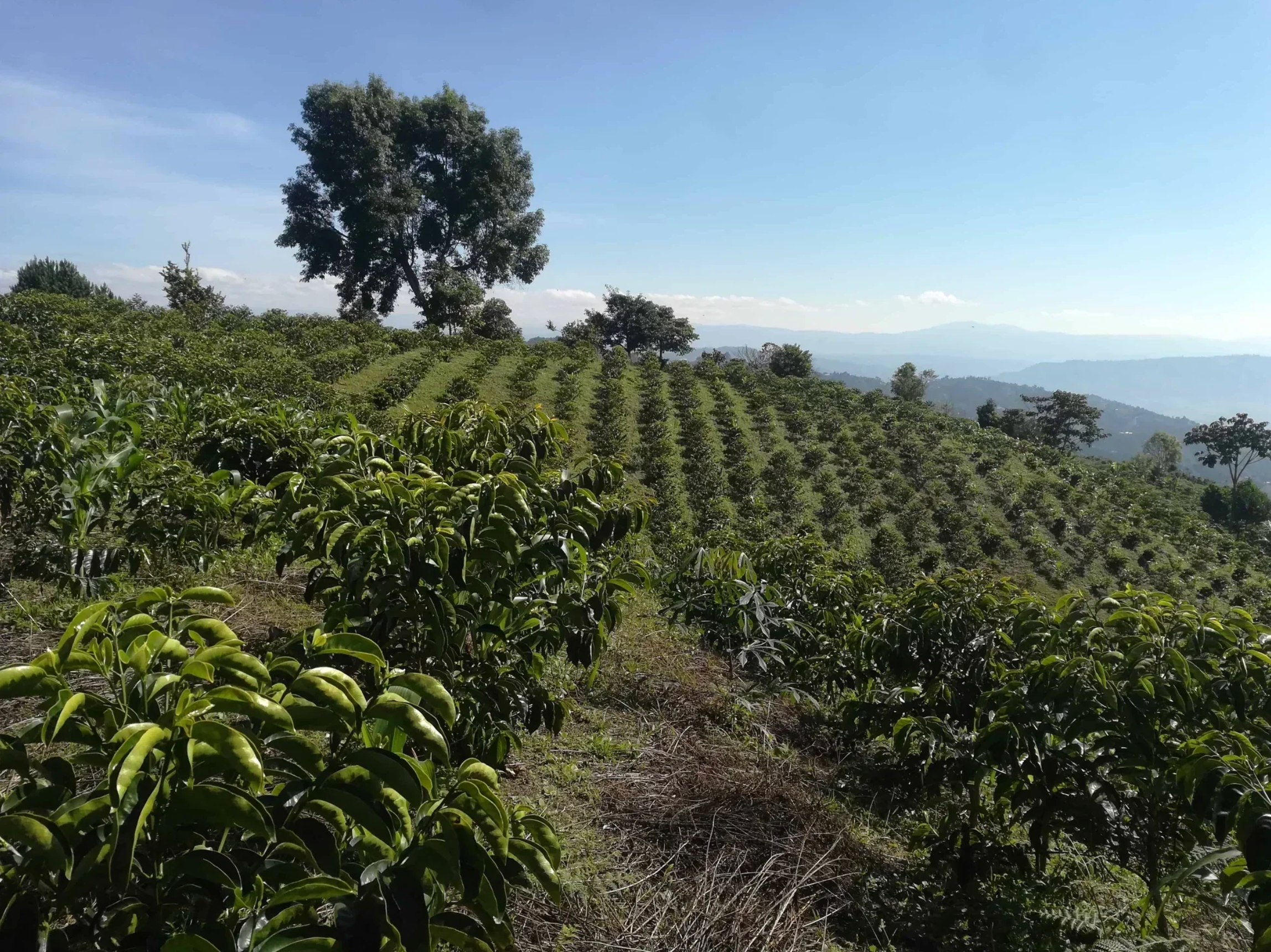
This coffee comes from Finca El Diviso in Pitalito, Huila, owned and operated by Nestor Lasso and his family. The farm traces back three generations to Nestor’s grandfather, José Uribe, who first established coffee cultivation at El Diviso. Over time, the family invested in infrastructure to process differentiated coffees, allowing them to pursue specialty production and expand into new varieties. Their vision has been both to improve cup quality and to create a better livelihood through coffee.
This lot is an Anaerobic Natural, produced through an intensive and carefully monitored fermentation protocol:
-
Harvest → Only ripe cherries are selected, measured at 24–26° Brix. Defective and underripe cherries are removed by hand.
-
Pre-fermentation → Cherries undergo a 48-hour oxidation stage, where leachates are mixed with the fruit, stabilizing sugars and acidity (pH 4.5).
-
Washing → Cherries are floated in cold water (10–12°C) to remove impurities, then briefly rinsed at 50°C.
-
Anaerobic fermentation → The cherries are placed in sealed plastic cans for 80 hours at 35°C. A small dose of saccharomyces cerevisiae yeast (strain T58), commonly used in brewing, is added to shape the fermentation profile.
-
Drying → The coffee is dehydrated for 12 hours using mechanical dryers, then finished in parabolic drying systems for about 15 days until optimal moisture content is reached.
The result is a coffee that reflects both traditional farming heritage and cutting-edge processing innovation. The use of selected yeast strains highlights the scientific precision now possible in specialty coffee, producing unique profiles that go far beyond conventional naturals.
Coffee Processing Spotlight — Anaerobic Fermentation
Anaerobic fermentation refers to any coffee fermentation that takes place in a sealed, oxygen-free environment. Unlike traditional washed or natural processing — where cherries or parchment ferment in open tanks exposed to air — anaerobic methods create unique conditions that allow different microorganisms to thrive.
How It Works
-
Cherries or pulped coffee are placed into sealed tanks or vessels.
-
Oxygen is removed or displaced, often by naturally occurring carbon dioxide released during fermentation.
-
Inside this oxygen-free environment, fermentation proceeds differently than in open-air tanks, often producing distinct flavor outcomes.
Why It’s Different
-
The absence of oxygen allows specific yeasts and bacteria to dominate, which can yield unusual or intensified flavors.
-
Producers can manipulate time, temperature, and even inoculated yeast strains to achieve precise results.
-
Anaerobic fermentation is not tied to a single process — it can be paired with washed, natural, or honey methods.
What to Expect in the Cup
Coffees processed anaerobically often feature:
-
Fruit-forward intensity (berry, tropical fruit, or jam-like notes)
-
Enhanced body and sweetness compared to traditional washed coffees
-
Experimental complexity, sometimes with unexpected flavors (winey, floral, or spice-driven)
Because anaerobic fermentations require careful control, they carry more risk of over-fermentation or defects if not managed precisely. When executed well, however, they can produce some of the most distinctive and sought-after profiles in specialty coffee.
Like many experimental Colombian coffees, El Diviso demonstrates how advanced fermentation methods can amplify fruit notes, sweetness, and aromatic complexity. Compared with classic washed Colombians, which often emphasize balance and clarity, this anaerobic natural highlights intense fruit character, sparkling acidity, and layered florals.
Profile
-
Roast: Light
-
Region: Pitalito, Huila, Colombia
-
Farm: Finca El Diviso
-
Producer: Nestor Lasso & Family
-
Process: Anaerobic Natural
-
Elevation: 1,800m
-
Variety: Ethiopian Landrace (74112)
-
Cup: Peach Nectar, Strawberry Sour, Lavender Lemonade
Share:
Nicaragua — Maximino’s Maceration Natural Microlot
Colombia — Atunkaa Decaf