
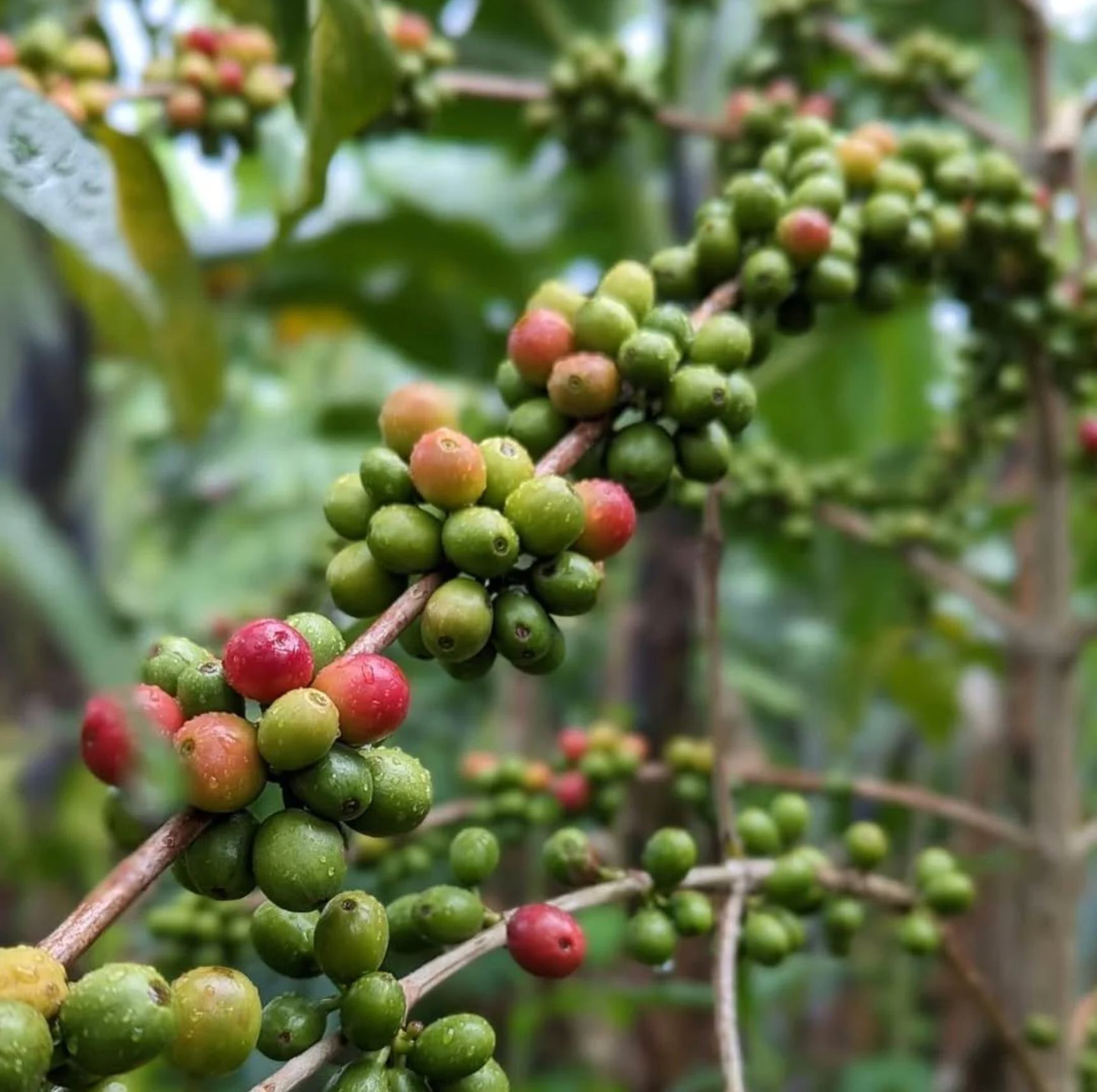
This offering comes from Bukalasi Village in the Bududa District, situated on the slopes of Mt. Elgon in eastern Uganda. The coffee was sourced through our direct-trade relationship with Jake Smith and Homage Coffee Source, whose on-the-ground presence enables access to traceable, farmer-focused lots in both Uganda and Burundi.
Uganda’s coffee sector has historically been oriented toward volume production, often with smallholder farmers home-processing cherries and delivering wet parchment to mills. This system has made traceability and quality control more challenging. However, in recent years, initiatives such as Manafwa Specialty Seeds have worked to change this. Operating their own washing station since 2019, Manafwa provides farmers with centralized processing, education on quality harvesting, and sustainable management practices. The result is coffees with greater clarity, structure, and sweetness than much of the country’s traditional output.
This lot is also notable for its post-harvest treatment: the coffee was rye-barrel aged in a freshly drained Alpine Rye barrel from Wood’s High Mountain Distillery. The name “Picasso’s Palate” honors Juste Picasso Nduwayo, a producer and leader connected to projects at origin. The double meaning — palate (taste) and palette (color, artistry) — reflects both the flavor depth of the coffee and the creativity behind its processing.
Coffee Processing Spotlight — Barrel-Aged Coffee
Barrel-aging is a post-harvest treatment in which green coffee beans are aged inside freshly emptied barrels that previously held spirits such as whiskey, rum, rye, or wine. While not a traditional processing method like washed or natural, it has become an experimental technique in specialty coffee to add complexity and depth to a lot.
How It Works
-
Green coffee beans (unroasted) are placed inside a recently drained barrel.
-
The beans are rotated or agitated periodically to ensure even contact with the barrel interior.
-
Over several weeks, the beans absorb aromatic compounds from the wood and the spirit-soaked staves.
-
Once the aging period is complete, the beans are roasted and prepared as usual.
Why It’s Different
-
The beans themselves never come into contact with liquid — only with the barrel’s aroma-soaked wood.
-
Depending on the type of barrel, flavor notes can range from vanilla, caramel, and oak (bourbon) to spice and malt (rye) or even rich fruit and tannins (wine).
-
Each barrel produces a unique result, making these coffees inherently limited and experimental.
What to Expect in the Cup
-
Spirit-driven aromatics layered over the base coffee profile.
-
Additional notes such as malt, vanilla, toasted oak, or spice, depending on the barrel used.
-
Typically rounder, heavier body, complementing dessert-like or robust cup profiles.
Because barrel-aging is highly variable, it is most often used for microlots and special releases rather than large-scale production. When executed carefully, it can transform a familiar origin into a novel and memorable drinking experience.
Like other washed Ugandan coffees, Picasso’s Palate offers structure and balance, but the barrel-aging imparts an additional layer of spice, malt, and wood-driven aromatics. Compared with washed coffees from neighboring Kenya, which often emphasize high acidity and berry notes, Ugandan lots such as this tend toward rounder sweetness and grain-like depth, here accentuated by the rye-barrel treatment.
Profile
-
Roast: Medium
-
Region: Mt. Elgon, Eastern Uganda
-
Farm/Community: Bukalasi Village, Bududa District
-
Producer/Partner: Manafwa Specialty Seeds, with Homage Coffee Source
-
Process: Washed, Rye-Barrel Aged
-
Elevation: 1,800–2,000m
-
Variety: SL-14
-
Cup: Cherrywood, Malt, Ginger Snap
Share:
Colombia — Atunkaa Decaf
Timberline — Peregrine Roasters Flagship Blend